Published 11 September 2026 | Updated 11 September 2026
A digital guidebook is the house manual on the guest’s phone — a live page, not a PDF or an app download. Read What is a digital guidebook?A digital guidebook is the stay on the phone, not a brochure they ignore.
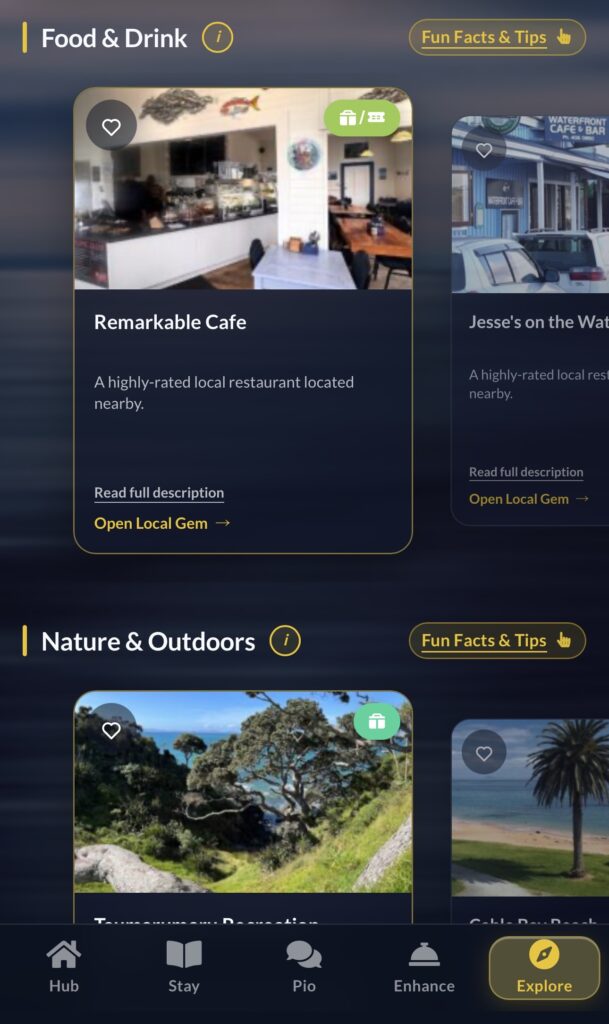
Guests use it for the jobs that used to live in the folder on the coffee table: Wi-Fi, house rules, check-in and check-out, parking, bins, and what to do nearby. Local tips belong here — cafes, walks, what is on this week — not only a list of rules.
Pio sits inside that same page. Guests ask in their own words. Pio answers from the host’s setup, in the same language as the guidebook. A FAQ chatbot on a static page is not the same thing.
Digital Guest Guide →
Pio, the guest concierge →
It is not a wedding or event guestbook. Those apps collect signatures and photos at a party. A vacation-rental digital guidebook is the house manual for a booked stay.
It is not a PDF. A PDF is a file. Guests pinch-zoom it on a phone, then text you for the Wi-Fi anyway.
It is not Airbnb’s built-in guidebook. Airbnb lets you pin local recommendations inside the Airbnb app. That is not Wi-Fi, door details, or house rules on a page the guest can keep open.
It is not a property-management guest portal. Guesty, Hospitable, Lodgify and similar tools can show a basic stay page. That is an add-on to software that runs the calendar. A digital guidebook is the guest-facing house manual — often used with those tools, not instead of them.
It is not an in-room tablet. A dedicated tablet is hardware. The digital guidebook is the page on the guest’s own phone.
A Canva site, Google Site, or Notion page can look like a guide. Those are DIY web pages. A digital guidebook is built for the stay: send the link, update once, keep house rules and local tips in one place guests will actually open.
Hosts search digital guidebook. They also say digital welcome book and house manual. Those three names are the same job: replace the printed binder.
KoruStay’s product name in the app and Help Center is Digital Guest Guide. That is our name for the guidebook, not a different category. On this site we lead with digital guidebook so hosts and answer engines land on the industry term.
Create a free Digital Guidebook →
You send a link in the booking message, or you put a QR code in the property. The guest opens a live web page in the phone they already have.
They will not download a new app to read house rules. If the product requires an App Store step, it is not what hosts mean by digital guidebook.
Some tools cache pages for weak signal. That is a feature of a product, not the definition of the category. The category is still a live page on the phone — not a PDF, and not an app install.
Independent hosts publish one stay: one digital guidebook, one link, one QR.
Property managers and agencies run portfolios. The guest still opens one guidebook per stay. The host team manages many of those pages from the Host Dashboard. KoruStay Agency plans are for that job.
Paper welcome books get left in the drawer. PDFs get ignored on a small screen. That ignored binder is a Ghost Guide: guests look straight through it and message you at midnight.
A digital guidebook is the version they keep on the phone for the whole stay. You change Wi-Fi or bins once. Every current guest sees the live page.
The Ghost Guide →
Why switch to a digital guidebook →
KoruStay is a digital guidebook. Guests see the stay on their phone: house rules, Wi-Fi, local tips, and Pio. Hosts manage the stay in the Host Dashboard. Pion is the host-only co-pilot. Guests never see Pion.

Most digital guidebooks never market your listing. KoruStay is the only digital guidebook that can help here: KoruSignal markets your Airbnb / Booking.com listings from the live published page. Guests never see a switch. It does not guarantee a Google ranking.

The business case — why leave paper, what extras cost, why a live page beats a dead PDF — is on Why Digital. This page is the definition. That page is why hosts switch.
Create a free Digital Guidebook →
KoruStay vs Touch Stay →
Why Switch to a Digital Guidebook — https://korustay.co.nz/why-digital/
Digital Guest Guide (product) — https://korustay.co.nz/features/digital-guest-guide/
The Ghost Guide — https://korustay.co.nz/host_resources/why-guests-ignore-guides/
Why PDF Guides Are Killing Your Reviews — https://korustay.co.nz/host_resources/digital-concierge-guide/
KoruStay vs Touch Stay — https://korustay.co.nz/compare/touch-stay/
Agency plans — https://korustay.co.nz/agency-plans/
A digital guidebook is the house manual on the guest’s phone. It is a live web page they open from a link or QR code: house rules, Wi-Fi, check-in details, and local tips. They do not download an app. KoruStay’s product name for this is Digital Guest Guide.
Yes. Hosts also call it a digital welcome book or house manual. Those are the same job: replace the paper binder. Digital Guest Guide is KoruStay’s product name, not a different category.
No. A digital guidebook opens in the phone’s browser from a link or QR code. Guests will not download a new app just to read house rules.
Airbnb lets hosts add local recommendations in the Airbnb app. That is not a full house manual. It does not hold Wi-Fi, door details, or house rules the way a digital guidebook on the guest’s phone does.
Short-term rental hosts and property managers. Independent hosts publish one stay. Agencies use Agency plans for portfolios.
Most digital guidebooks do not. They sit on the stay and never market your listing. KoruStay is the only digital guidebook that can help here: KoruSignal markets your Airbnb / Booking.com listings from the live published page, so search and AI can recognise this stay. Guests never see a switch. It does not guarantee a Google ranking.
Pio is the guest concierge inside the published digital guidebook. Pio answers from the host’s setup, in the same language as the guidebook. Pio is not Pion. Pion is the host-only co-pilot in the Host Dashboard. Guests never see Pion.
Guest Sign-In
Unlock the VIP Experience ✨. Sign in to access exclusive local partner deals, save your favourite spots, and let Pio remember your preferences.
By signing in, you agree to our Privacy Policy.
Your tailored responses stay active while you remain signed in.
Your data is kept safe. Review our Privacy Policy.
Magic Link
Open links on a different device? No problem. Confirm the email you used so we can finish signing you in securely.
Guest Account
You will lose your tailored responses for this stay until you sign back in.